
A protective coating system for steel combines products with defined functions, application conditions and film thicknesses. The primer bonds to the prepared steel and provides the foundation for corrosion protection. An intermediate coat can increase barrier protection, while the topcoat provides the exposed surface properties, colour and finish. The complete system is selected around the substrate, service environment and durability target. A layer schedule gives buyers a clear basis for comparing products, coat counts and required thicknesses.
What each layer contributes
| Layer | Main function | Typical coating types and selection considerations |
|---|---|---|
| Primer | Adhesion to prepared steel and corrosion protection | Zinc-rich epoxy for suitable prepared steel; inhibitive primers for compatible substrates; alkyd or epoxy primers selected for the specified service |
| Intermediate coat (midcoat) | Increases film build and restricts the ingress of moisture and corrosive agents | High-build epoxy or other compatible barrier coatings; check attainable thickness and recoat window |
| Topcoat | Provides the exposed finish, including colour, gloss, weathering or chemical resistance | Polyurethane, acrylic, fluorocarbon or other finish chemistry selected for the exposure and required appearance |
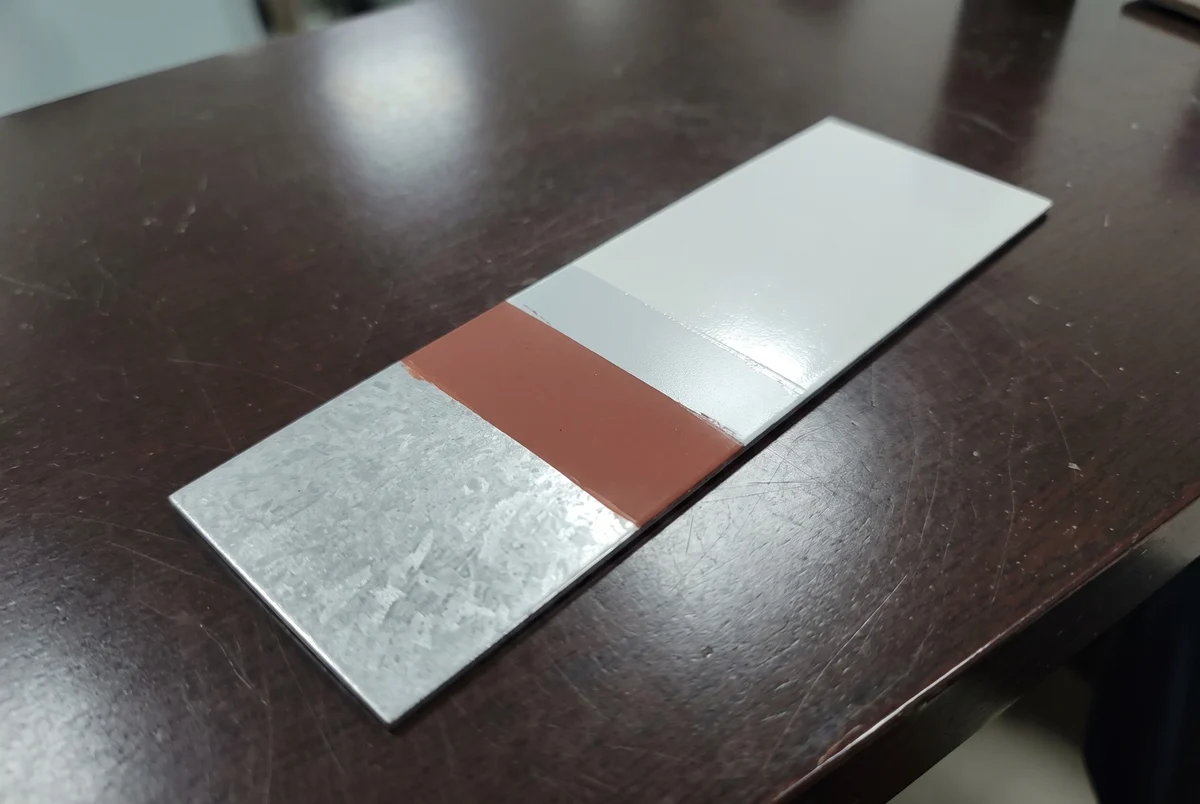
A zinc-rich primer can provide galvanic protection when its formulation and contact with the steel support that mechanism. Inhibitive pigments and barrier-forming resins provide other approaches to corrosion control. The primer choice therefore begins with the actual steel surface and the intended complete system.
In an outdoor system, a suitable weather-resistant finish helps retain colour and gloss. Epoxy coatings are widely used for adhesion and barrier build; where appearance in sunlight matters, a compatible weather-resistant finish is a common system choice.
Compare two-layer, three-layer and DTM systems
| System arrangement | How the functions are distributed | Key selection information |
|---|---|---|
| Primer + topcoat | Substrate bonding and protection in the primer; exposed finish in the topcoat | Compatible products, thickness per coat and system performance |
| Primer + intermediate coat + topcoat | Separate bonding, barrier build and finish functions | Thickness contribution of each layer, curing conditions and total build |
| Direct-to-metal (DTM) coating | A compatible coating combines direct substrate application with protective and finish functions | Suitable metals, preparation, number of coats, total thickness and documented service conditions |
The number of layers and coats follows the selected system. Two-layer and three-layer arrangements can be designed for different levels of exposure and durability. A DTM product may also be applied in multiple coats to achieve the specified coverage and thickness.
The terms 1K and 2K describe the number of material components: a one-component product is supplied ready for preparation according to its instructions, while a two-component product combines a base and a curing component. Coat count is recorded separately in the application schedule.
Dry film thickness and coat count
Dry Film Thickness (DFT) is the thickness of a dry coating, usually expressed in micrometres (µm). The DFT of each coat and the total thickness of the completed system are separate specification fields. Multiple coats can use the same product, and local stripe coats can provide additional coverage at welds, edges and difficult geometries.
Wet Film Thickness (WFT) is the thickness of the coating while wet. For an unthinned coating, the theoretical relationship is:
WFT (µm) = target DFT (µm) ÷ volume solids fraction.
For example, an illustrative coating with 80% volume solids and a target DFT of 160 µm has a theoretical WFT of 200 µm. Its theoretical coverage is 5 m²/L. Actual material requirements incorporate the specified thinning, surface profile, geometry, application method and practical losses.
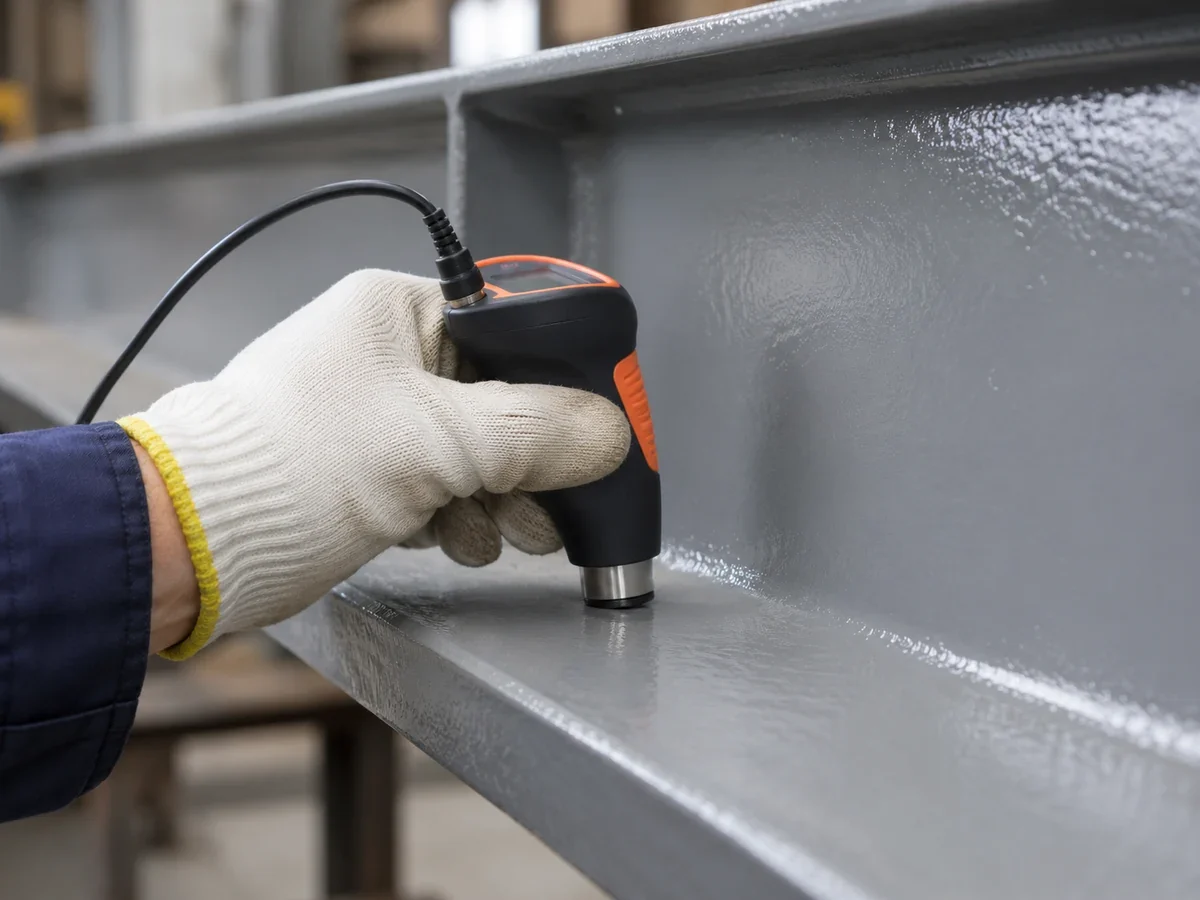
Inspect thickness using the measurement method and acceptance criteria specified for the project. Record gauge readings and the locations represented, including any additional requirements for edges and welds.
How to read a steel coating layer schedule
A useful schedule sets out the complete protective system in a format that procurement and application teams can share:
| Layer role | Product and components | Number of coats | Nominal DFT per coat (µm) | Total DFT for layer (µm) | Recoat interval and conditions |
|---|---|---|---|---|---|
| Primer | Product code / components | Enter coat count | Enter DFT | Enter layer total | Product-specific window |
| Intermediate, where specified | Product code / components | Enter coat count | Enter DFT | Enter layer total | Product-specific window |
| Topcoat | Product code / components | Enter coat count | Enter DFT | Enter layer total | Product-specific window |
| Local stripe coat, where specified | Product code / application locations | Enter passes | Project requirement | Local coverage requirement | Sequence and conditions |
| Main system total | Specified sequence | Main coat count | — | Specified total DFT | Application programme |
Record application methods, minimum and maximum recoating intervals, substrate temperature and the conditions associated with each product's technical data. Include the system's supporting performance information for the intended service environment and durability target.
Choose the system for the substrate and exposure
For bare carbon steel, start with its initial surface condition and the specified preparation. For galvanised steel, shop-primed steel or previously coated metal, identify the existing surface and select a compatible primer and layer sequence.
Use ISO 12944 corrosivity categories to record the environmental conditions and steel blast-cleaning grades to understand the preparation requirements. For existing painted structures, the metal recoating enquiry guide explains how to document the old coating and site constraints.
Share the substrate, exposure and required durability with Jinlang to discuss suitable protective coating products and a complete layer schedule.
Request a Steel Coating Layer Schedule