Sa grades describe the visual cleanliness of steel following abrasive blast-cleaning. Sa 1 removes loosely attached material, Sa 2 achieves thorough cleaning, Sa 2½ (often written Sa 2.5) permits slight traces of staining, and Sa 3 produces a visually clean surface with uniform metallic colour. Alongside the specified visual grade, a steel coating project may require checks for surface profile, dust, soluble salts and the condition of welds and edges.
ISO 8501-1 blast-cleaning grades at a glance
ISO 8501-1:2007 uses rust grades A, B, C and D to describe the initial condition of uncoated steel and preparation grades to describe the surface after cleaning. Its written criteria and reference photographs provide the basis for visual inspection.
| Grade | Cleaning level | Visual condition after preparation |
|---|---|---|
| Sa 1 | Light blast-cleaning | Visible oil, grease and dirt are removed, together with loose rust, mill scale, coatings and other loose material. |
| Sa 2 | Thorough blast-cleaning | Most rust, mill scale, coating and foreign material are removed; firmly attached remnants may remain. The surface is free of visible oil, grease and dirt. |
| Sa 2½ | Very thorough blast-cleaning | Visible contamination, rust, mill scale and previous paint are removed; slight residual staining may appear as spots or streaks. |
| Sa 3 | Blast-cleaning to visually clean steel | Visible oil, grease, dirt, rust, mill scale, paint and foreign material are removed; the surface has a uniform metallic colour. |
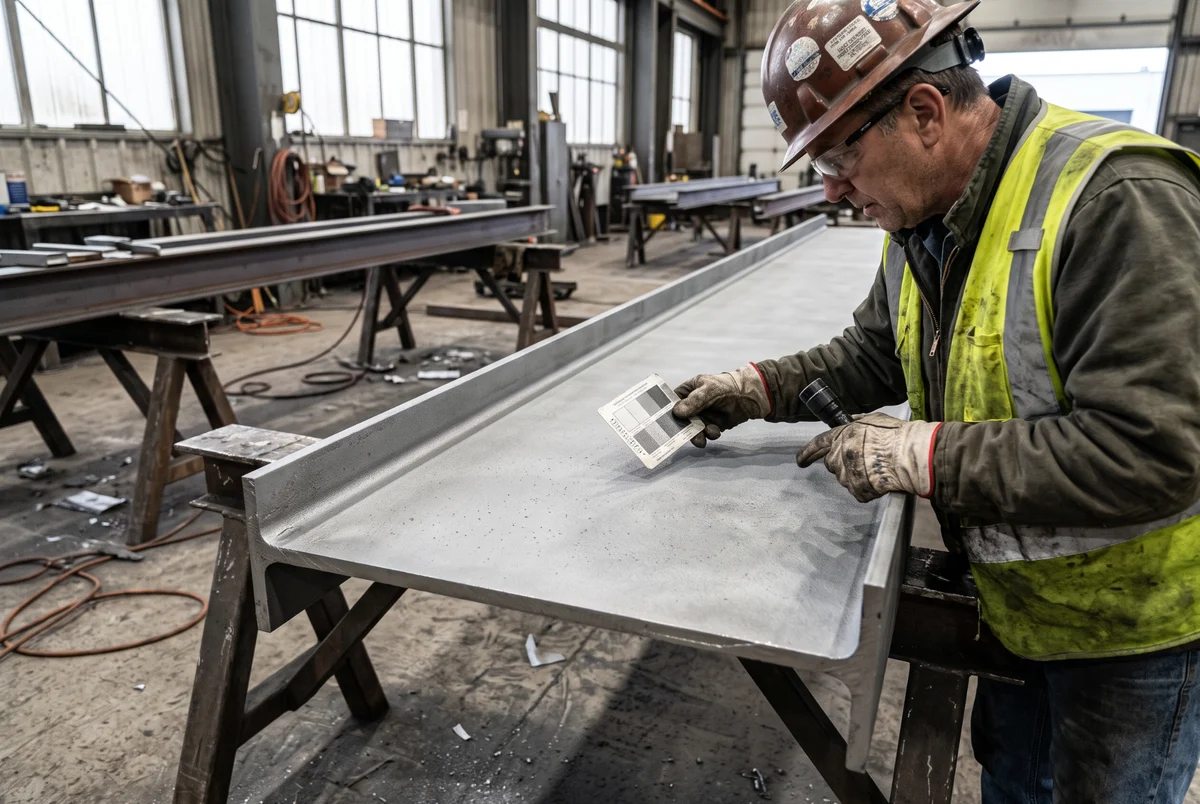
The initial rust condition affects the appearance after preparation. Steel that originally had heavy pitting can retain a different texture from new steel even when both have reached the specified visual grade. Inspect the prepared surface using the applicable written criteria and corresponding reference images under suitable lighting.
Sa 2½ vs Sa 3: the difference in surface appearance
The main visual distinction is the permitted residual staining. Sa 2½ allows slight traces of staining in the form of spots or streaks. Sa 3 requires the visually clean metallic appearance described by the standard.
Many protective coating specifications use Sa 2½ for abrasive blast-cleaned steel. The required grade for a particular project follows the selected primer, system specification and service conditions. Both grades are assessed through the visual criteria; surface roughness and soluble contamination are separate inspection properties.
ISO grades and SSPC/NACE references
Engineering documents may also specify AMPP standards that retain the familiar SSPC/NACE designations.
| ISO 8501-1 grade | Broadly comparable SSPC/NACE reference |
|---|---|
| Sa 1 | SSPC-SP 7 / NACE No. 4 — Brush-Off Blast Cleaning |
| Sa 2 | SSPC-SP 6 / NACE No. 3 — Commercial Blast Cleaning |
| Sa 2½ | SSPC-SP 10 / NACE No. 2 — Near-White Metal Blast Cleaning |
| Sa 3 | SSPC-SP 5 / NACE No. 1 — White Metal Blast Cleaning |
The standards have their own acceptance criteria. For example, the 5% staining allowance associated with SP 10 applies within its defined unit area; Sa 2½ uses the visual staining descriptions in ISO 8501-1. Identify the governing standard and edition in the inspection record.
Surface profile, dust and soluble salts
A coating specification often combines several independent surface preparation requirements. Visual cleanliness describes what the prepared surface looks like. Surface profile describes its microscopic peaks and valleys. Dust and soluble contamination are assessed through their respective test methods.
| Inspection item | What it measures | Reference or record |
|---|---|---|
| Visual cleanliness | Remaining visible rust, scale, paint and staining | ISO 8501-1; specified Sa grade and reference photographs |
| Surface profile | Roughness created or exposed by preparation | Applicable ISO 8503 method; specified profile range and readings |
| Surface dust | Amount and size of residual particles | ISO 8502-3; specified dust criteria and test locations |
| Water-soluble salts | Soluble contamination on the surface | Specified extraction and assessment method, such as ISO 8502-6 and ISO 8502-9; limit, units and readings |
| Welds, edges and imperfections | Condition of areas requiring additional mechanical preparation | ISO 8501-3 or specified preparation requirements |
| Environmental conditions | Air and steel temperature, humidity and condensation risk | Project and primer application limits; environmental readings |
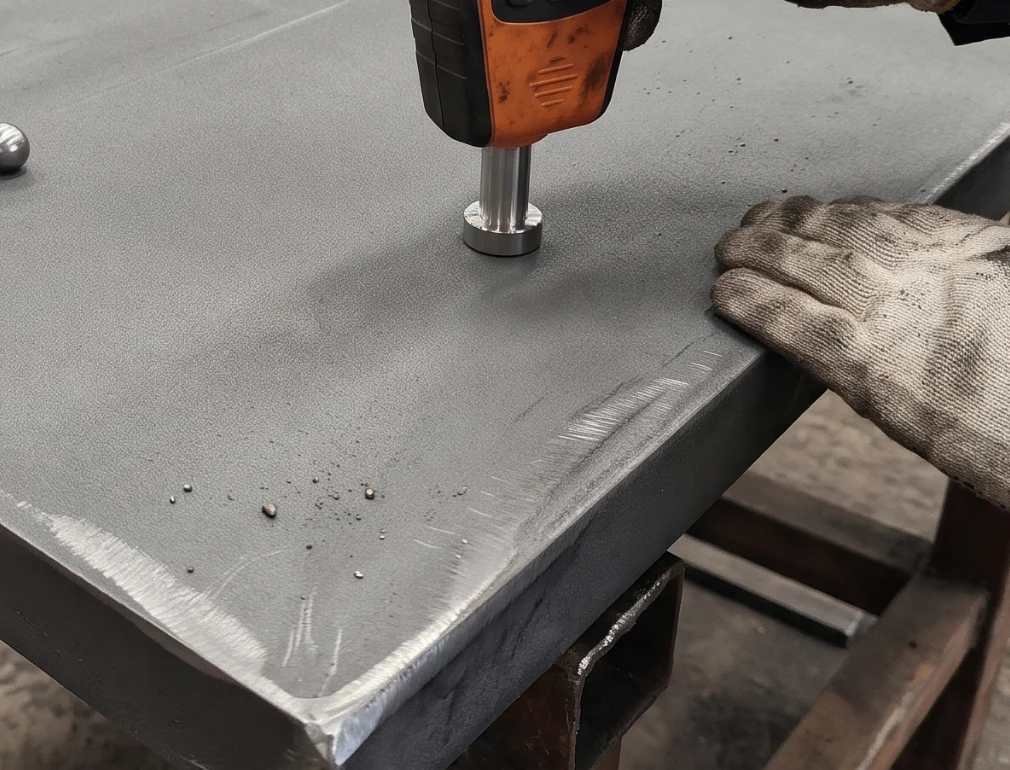
Abrasive selection influences the resulting surface profile. Steel grit, shot and mineral abrasives have different particle characteristics. Match abrasive type and size to the required profile, substrate and blasting process, and verify the result using the specified inspection method.
Choose the preparation reference for the job
| Preparation scope | Applicable reference |
|---|---|
| Bare steel or overall removal of previous coatings | ISO 8501-1, including Sa blast-cleaning and St hand/power-tool cleaning grades |
| Localised removal of previous coatings | ISO 8501-2 |
| Welds, edges and other surface imperfections | ISO 8501-3 |
| High-pressure water jetting | ISO 8501-4, including its applicable preparation and flash-rust grades |
The St 2 and St 3 grades describe hand and power-tool cleaning. These methods produce their own surface conditions, and primer suitability follows the specified preparation method and coating data. Water jetting generally exposes the existing surface profile; record the profile and required water-jetting grade separately.
Inspect the surface before priming
Record the preparation completion time, visual grade, profile readings and contamination results. Check the steel for changes in surface condition and condensation before coating. Where new oxidation or contamination appears, restore the specified surface condition using the appropriate preparation method and record the subsequent inspection.
Use the steel coating system guide to connect preparation requirements with the primer and remaining layers of the protective system.
Check Primer Surface Preparation Requirements