ISO 12944 atmospheric corrosivity categories describe the severity of the environment surrounding steel structures. The categories range from C1 (very low) to CX (extreme). Useful site assessments consider the duration of wetting, condensation, airborne salt, industrial pollution and the exposure of individual steel members. Together with the required durability, substrate and preparation conditions, these records form the starting point for selecting a protective coating system.
What ISO 12944 corrosivity categories describe
ISO 12944-2:2017 classifies atmospheric environments and also identifies categories for structures immersed in water or buried in soil. Its atmospheric classification uses the corrosion loss of standard specimens and gives examples of representative environments to assist assessment.
For project planning, collect information about the actual surfaces to be coated: how often they become wet, how long moisture remains, and which pollutants or salt deposits reach them. Existing environmental measurements and the assigned project category provide the basis for the coating specification.
C1 to C5 and CX: typical environments
| Category | Corrosivity | Representative atmospheric conditions | Site details to investigate |
|---|---|---|---|
| C1 | Very low | Heated, clean interiors with limited moisture exposure | Temperature control, ventilation and condensation |
| C2 | Low | Rural outdoor locations with low pollution; unheated interiors with occasional condensation | Seasonal moisture and indoor humidity |
| C3 | Medium | Urban or industrial atmospheres with moderate pollution; low-salinity coastal locations; humid production rooms | Salt deposition, pollution and frequency of wetting |
| C4 | High | Industrial areas and coastal environments with moderate salinity | Chloride exposure, industrial emissions and time of wetness |
| C5 | Very high | High-salinity coastal areas or humid, heavily polluted industrial environments; interiors with prolonged condensation and high pollution | Persistent moisture, salt accumulation and aggressive process conditions |
| CX | Extreme | Extreme offshore, industrial or other highly aggressive atmospheric environments | Severe salt exposure, wetting patterns, pollution and project classification evidence |
The examples identify conditions to investigate in each zone. Final classification uses the applicable environmental assessment and project specification.
Older project documents may use C5-I (industrial) and C5-M (marine). ISO 12944-2:2017 uses a combined C5 category and introduces CX for extreme atmospheric environments. Record the standard edition used by the project when reviewing historical and current specifications.
Map different exposure zones within the same site
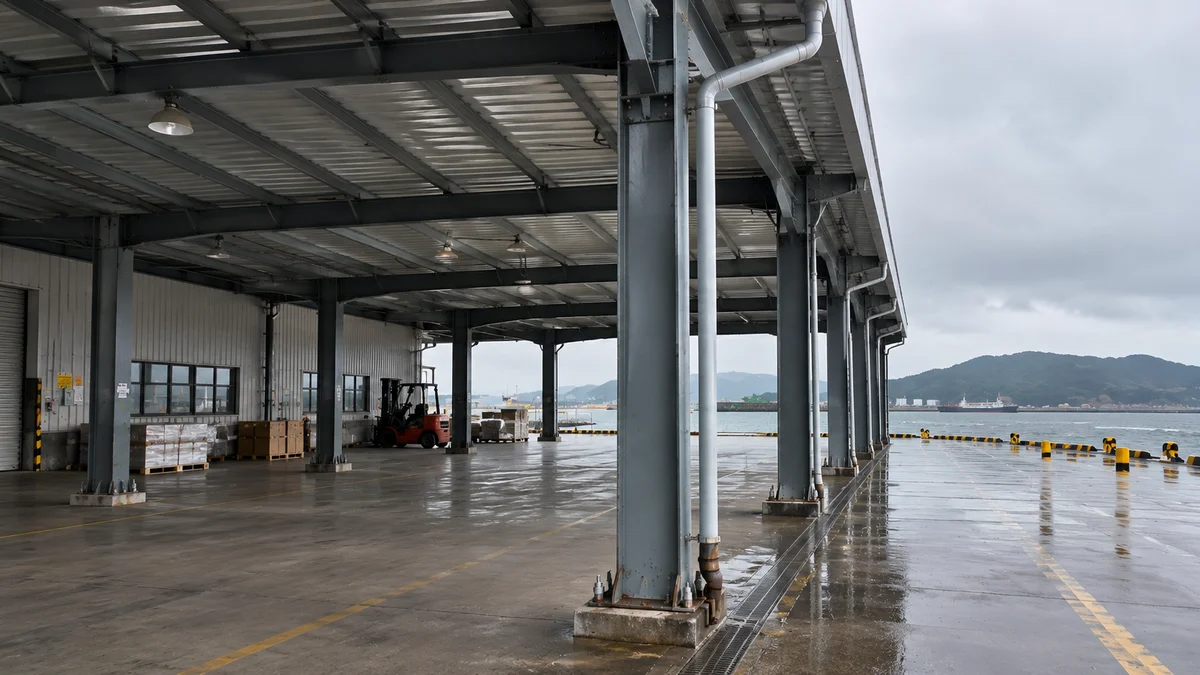
Consider an industrial building near the coast. Steel inside a dry, ventilated room may experience relatively limited wetting. An external loading canopy faces wind, rain and salt deposition, while sheltered undersides may accumulate deposits and retain moisture for longer periods. Each zone deserves its own environmental record.
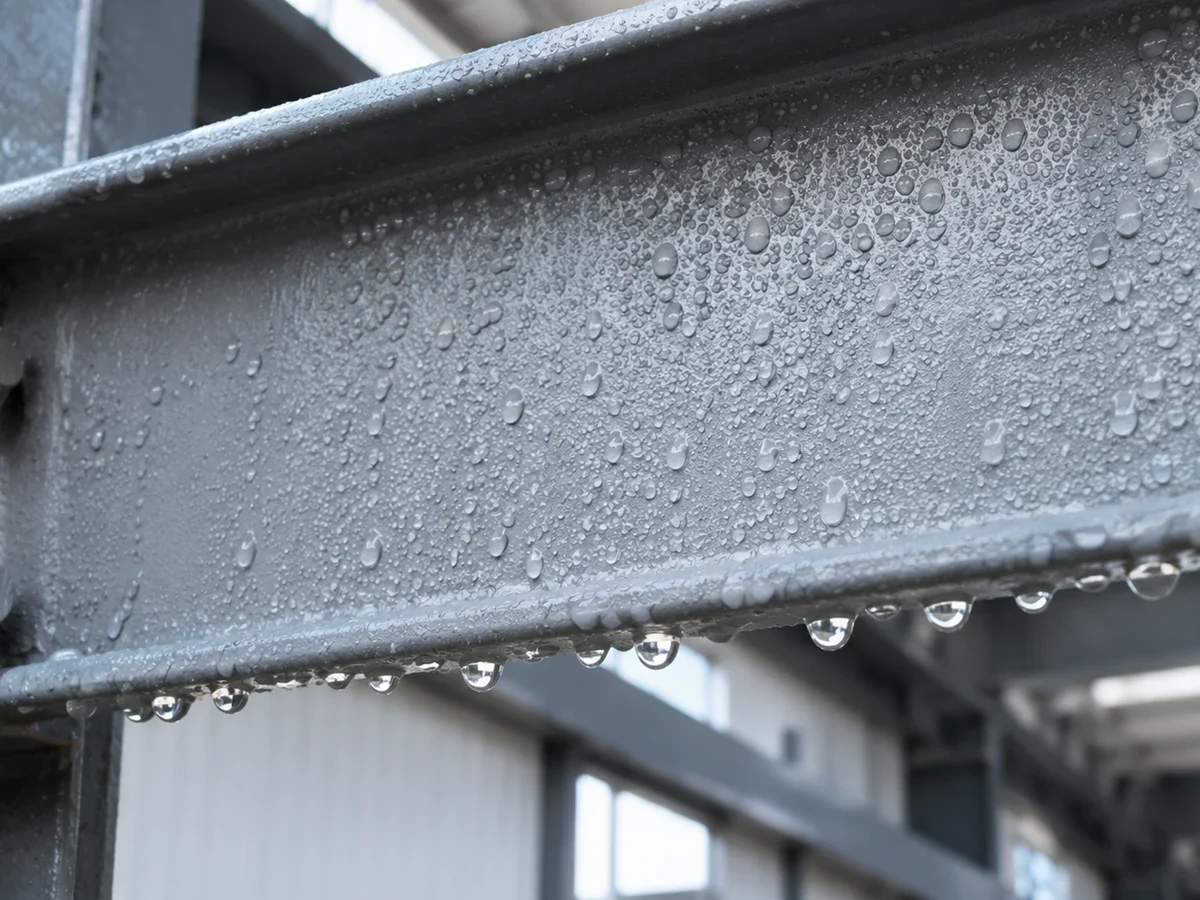
Interior steel can also experience recurring condensation when humid air contacts a cooler surface. Record roof spaces, refrigeration areas and wet-process rooms separately where their operating conditions differ.
Use a marked-up drawing to link environmental observations with the exact steel members. For each zone, record the following:
| Zone | Wetting and condensation | Salt and process pollution | Assigned category and assessment evidence |
|---|---|---|---|
| Indoor roof steel | Enter duration and frequency | Enter observed deposits or pollutants | Enter project category or assessment status |
| External loading canopy | Enter rain and shelter conditions | Enter salt and process exposure | Enter project category or assessment status |
| Water-contact steel | Enter liquid, temperature and wetting pattern | Enter relevant water chemistry | Record the separate exposure class and project requirements |
Record immersion, splash and soil contact separately
ISO 12944 distinguishes several immersed and buried environments:
| Category | Environment |
|---|---|
| Im1 | Fresh water |
| Im2 | Sea or brackish water without cathodic protection |
| Im3 | Soil |
| Im4 | Sea or brackish water with cathodic protection |
Direct splash and tidal exposure combine changing wetting conditions and additional corrosion stresses. Describe these areas separately from the atmospheric and permanently immersed zones. Record liquid type, temperature, immersion conditions and cathodic protection where applicable. Offshore projects may also specify requirements from ISO 12944-9.
Add durability and preparation requirements
ISO 12944 uses durability ranges to express the expected period until first major maintenance of a protective coating system.
| Durability class | Planning range |
|---|---|
| Low (L) | Up to 7 years |
| Medium (M) | 7–15 years |
| High (H) | 15–25 years |
| Very high (VH) | More than 25 years |
The durability range informs maintenance planning and system selection. Commercial warranty terms are established separately in the project agreement.
A specification also records the substrate condition, preparation method, specified dry film thickness and application conditions. These fields allow the coating system to be evaluated against the required environment and durability as a complete arrangement.
Continue with the protective coating systems for steel guide to understand layer selection and the steel blast-cleaning grades guide to review preparation requirements.
Share your zone-by-zone exposure record and required durability with Jinlang to discuss the coating options for your site.
Review Coating Options for Your Site