Industrial resin floors are easier to maintain when the cleaning method matches the installed finish, surface texture and type of contamination. A practical maintenance programme combines dry grit removal, compatible cleaning products, suitable pads or brushes, and recovery of dirty liquid. For warehouse aisles, production areas and textured floors, regular inspection of traffic routes also helps maintenance teams identify local damage early and plan repairs with minimal disruption.
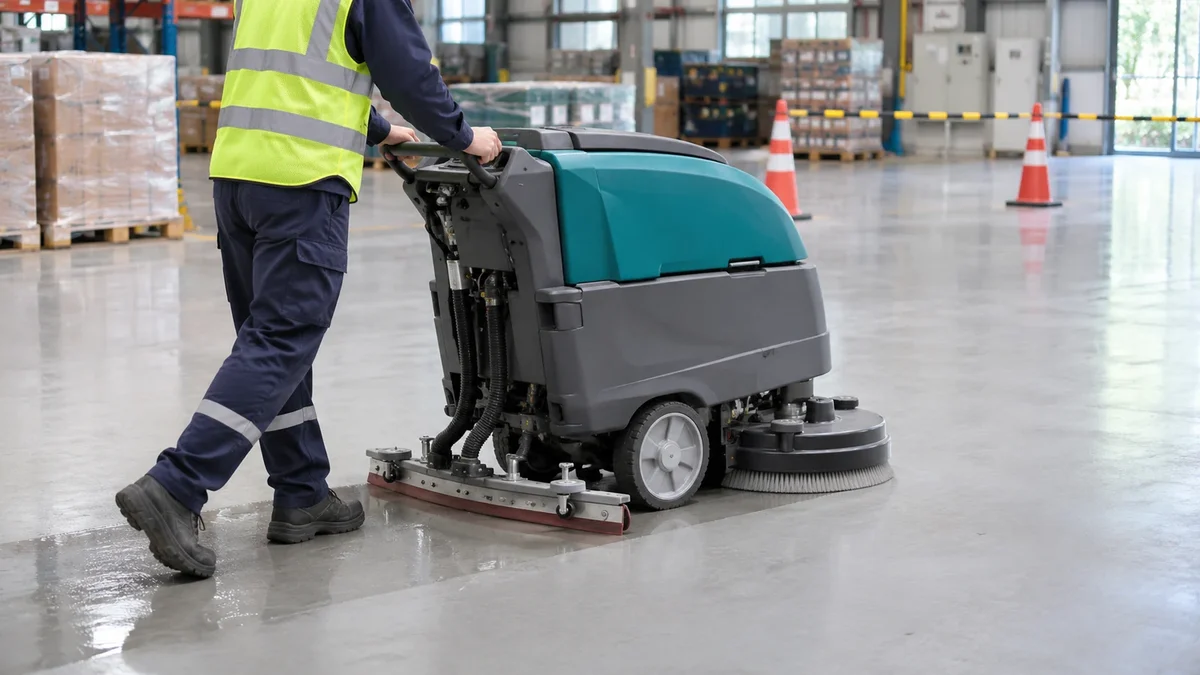
Identify the floor finish and cleaning conditions
Start with the floor handover information. Record the coating system, finish type, installation date and the date on which wet cleaning can begin. Smooth epoxy, polyurethane and aggregate-textured surfaces have different cleaning requirements. The permitted cleaners, scrubber settings and chemical exposure conditions should form part of the maintenance record.
Divide the facility into practical cleaning zones: entrances, main aisles, forklift turning points, machine areas and wet-process rooms. Each zone collects different contaminants and may need a different cleaning frequency.
At handover, remove construction dust and loose grit using suitable equipment. Where other trades are still working, use the temporary protection agreed for the installed floor. Plan the first wet clean around the system's curing and release schedule.
Match cleaning methods to surface texture and soil
| Floor surface or zone | Typical contamination | Starting cleaning method | Inspection after cleaning |
|---|---|---|---|
| Smooth resin floor | Dust, footprints, light soil | Dust mop or vacuum; compatible detergent and a soft pad or mop | Even finish and clean, dry surface |
| Textured or aggregate-broadcast floor | Grit and dirt lodged in the texture | Suitable brush scrubber with liquid recovery | Clean recesses and preserved texture |
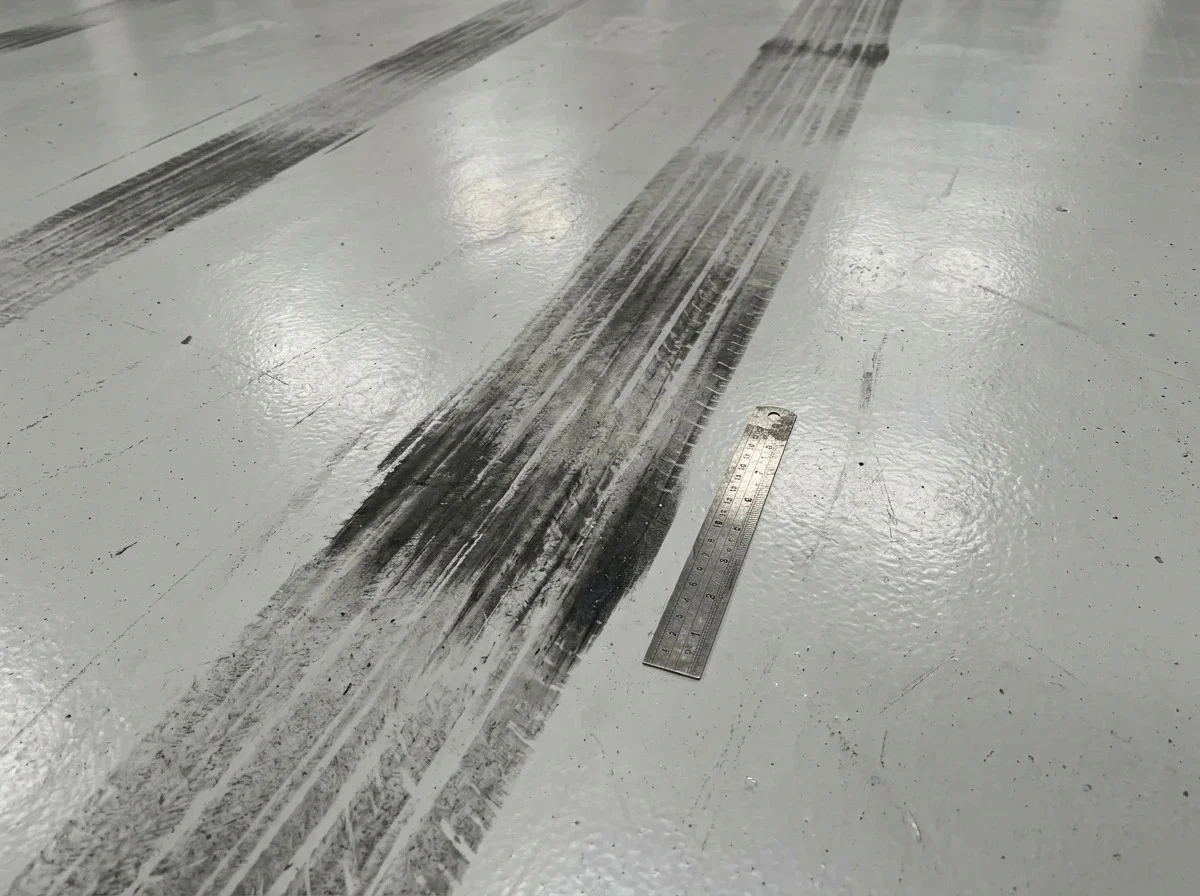
| Forklift aisles and turning areas | Tyre marks, rubber deposits, grit | Resin-compatible spot cleaner and controlled pad agitation | Mark removal, retained gloss and sound coating |
| Machine or maintenance areas | Oil and grease | Compatible degreaser, controlled dwell time and liquid recovery | Oil-free surface and no slippery residue |
Choose the detergent concentration, pad or brush, contact time and machine pressure together. A small trial area provides a practical way to check cleaning effectiveness and the appearance of the finish after drying. Record the settings that produce a satisfactory result for each zone.
Routine cleaning: remove grit, wash and recover
- Collect loose dirt and abrasive particles with a suitable vacuum, sweeper or dust mop. Pay particular attention to entrances and vehicle turning points.
- Apply the compatible cleaning solution at the specified dilution. Allow the contact time recommended for the cleaner and the floor finish.
- Agitate the surface with an appropriate pad, brush or mop. Textured floors benefit from equipment that reaches into the surface recesses.
- Recover the dirty solution, rinse where required and remove remaining liquid. Keep the cleaning area separated from traffic until the surface is ready for use.
Maintaining entrance mats, scrubber brushes, pads and recovery squeegees helps sustain cleaning quality. The UK Health and Safety Executive's floor-cleaning guidance also covers cleaning methods, equipment maintenance and access management during wet cleaning.
Treat tyre marks and local stains
Black forklift tyre marks often contain rubber transfer and other deposits. Start with a resin-compatible cleaner on a small marked area. Apply controlled agitation using a suitable non-abrasive pad, recover the solution and inspect the dry finish. Repeat the treatment within the cleaner's recommended operating conditions where needed.
Use the same trial approach when introducing a new degreaser or changing machine settings. Record changes in colour, gloss, texture or hardness alongside the cleaning result. This helps distinguish a removable deposit from a change in the coating itself.
Respond to spills
For chemical spills, follow the facility's spill response procedure and the spilled material's Safety Data Sheet (SDS). Trained personnel identify the substance, isolate the affected area, use the specified protective equipment and collect the spill using the prescribed method. Handle collected material and contaminated cleaning liquids according to the applicable disposal requirements.
After clean-up, inspect the affected coating for changes in appearance, hardness, texture or adhesion. Record the substance, affected area, estimated contact time and the condition of the floor before returning the zone to service.
Inspect wear and plan local repairs
| Observation | Practical next step |
|---|---|
| Tyre marks or surface deposits | Carry out a controlled cleaning trial and record the result. |
| Local loss of gloss or shallow wear | Inspect the wearing surface and review cleaning and traffic patterns. |
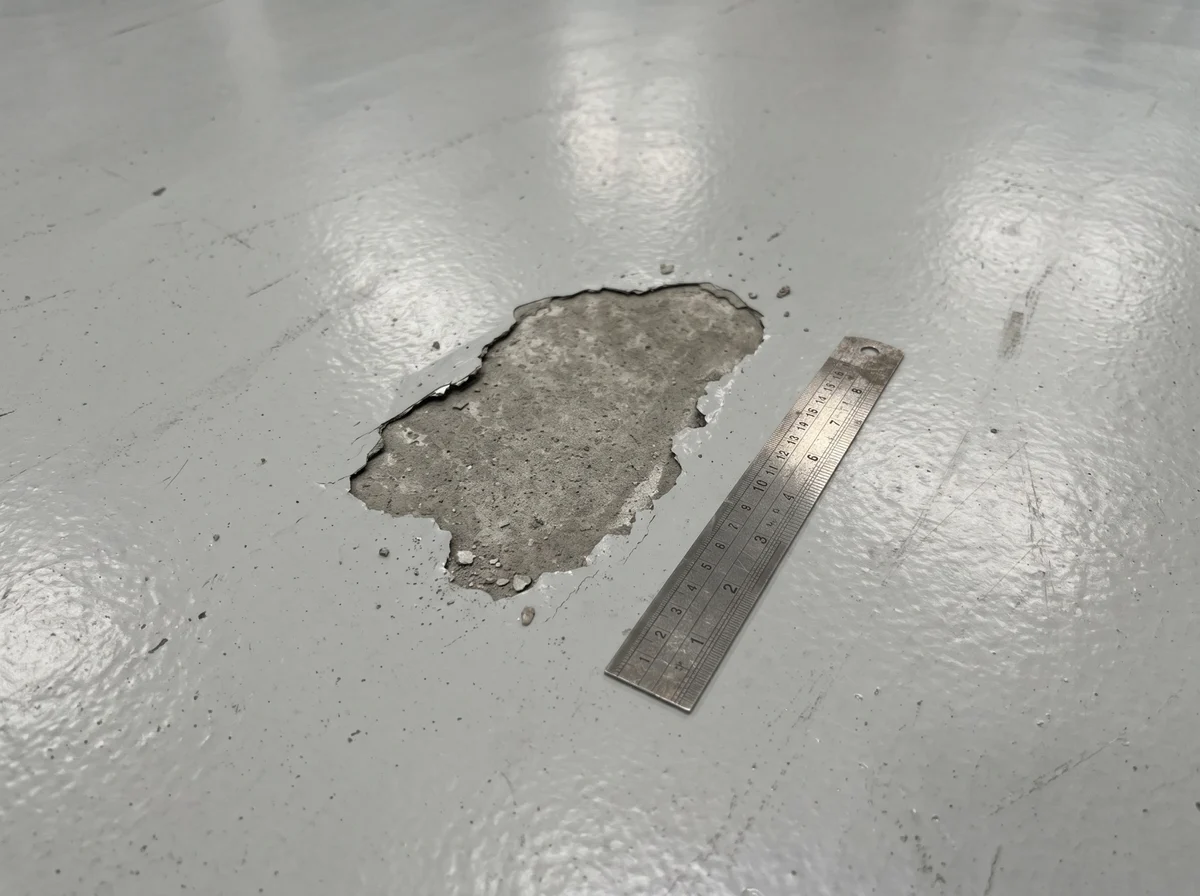
| Primer or concrete becoming visible | Assess the remaining layers and define a local repair or recoating area. |
| Blisters, lifting edges or peeling | Map the affected area and investigate moisture, adhesion and coating condition. |
| Cracks, damaged joints or substrate loss | Assess the concrete and joint condition before selecting repair materials. |
Keep a simple maintenance log with the zone number, date, cleaning method, observed damage and action taken. Repeated wear at the same turning point may indicate a need to review traffic patterns, wheel loads or the floor system in that area.
For larger worn or damaged areas, use the industrial floor renovation survey to define the repair scope. For local maintenance questions, send Jinlang the installed finish, cleaning method and photographs of the affected area.
Request a Floor Maintenance Review